

This test shows your scores for all nine Enneagram types using 90 short statements on a 5-level scale. It’s grounded in the nine-type model and language used by the International Enneagram Association and the Enneagram Institute: International Enneagram Association – The Enneagram and Enneagram Institute – How the Enneagram System Works. It’s designed for dependable results: balanced 10 items per type, reverse-worded checks to curb one-sided agreeing, randomized item order, and transparent scoring so you can verify how your profile is built.


How this test works
- Model: nine independent type scores (T1-T9), then a ranked profile.
- Format: 5 options from Strongly disagree to Strongly agree.
- Balance: 10 items per type, three are reverse-keyed.
- Order: items are shuffled to reduce position effects.
- Scoring: each answer adds 1-5 to the linked type (reverse items flip the score). Totals run 10-50 per type. 10 points mean 0%, 50 is 100% on the scale radar.
Nine types of personality according to The Enneagram Test
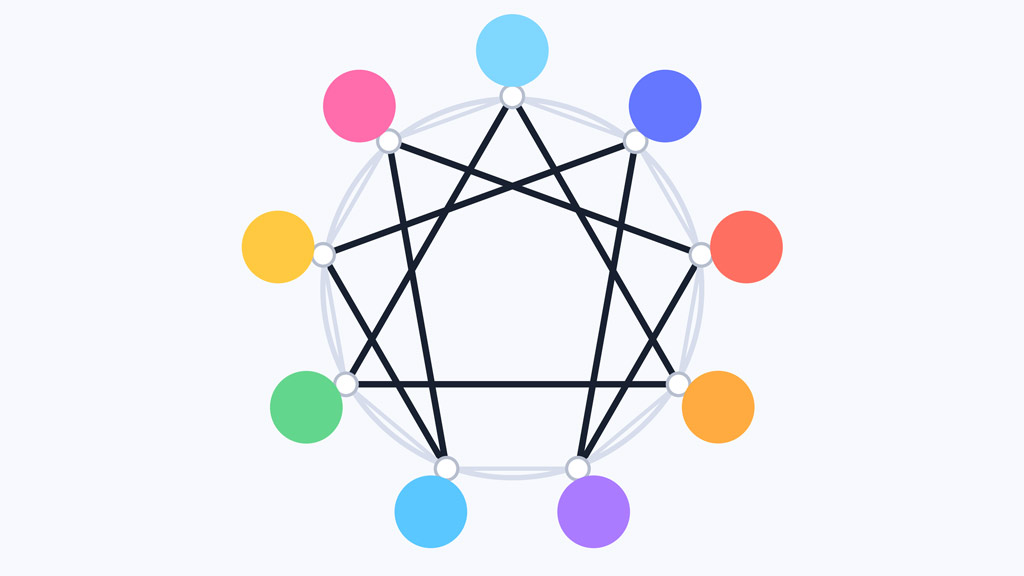
T1 – Reformer (Perfectionist) Motive: be good, correct, responsible. Items: standards, accuracy, rules, self-critique. Reverse: comfort with mess, cutting corners, leisure before duty.
T2 – Helper (Giver) Motive: be needed, loved through helping. Items: noticing needs, offering help, usefulness, warmth. Reverse: firm boundaries, “help only if asked,” others manage their own needs.
T3 – Achiever (Performer) Motive: succeed, be admirable. Items: goals, metrics, efficiency, image management. Reverse: indifference to image, tolerance for wasted time.
T4 – Individualist (Romantic) Motive: be authentic, unique, deep. Items: intense feelings, meaning, uniqueness, creative expression. Reverse: fitting in, comfort with “average,” staying engaged when unseen.
T5 – Investigator (Observer) Motive: be competent, self-sufficient. Items: analysis, privacy, conserving energy, boundaries. Reverse: jumping in without observing, easy sharing, reliance on others.
T6 – Loyalist (Skeptic) Motive: secure certainty, trusted support. Items: risk scanning, commitments, questions, trustworthy authority. Reverse: acting without worst-case plans, little reassurance, comfort without guidelines.
T7 – Enthusiast (Epicure) Motive: stay free, upbeat, stimulated. Items: options, reframing, variety, energy. Reverse: single-plan focus, facing pain head-on, long preparation over quick starts.
T8 – Challenger (Protector) Motive: stay strong, in control, protect. Items: directness, boundaries, decisive action, guarding others. Reverse: holding back opinions, quick trust/openness, avoiding confrontation.
T9 – Peacemaker (Mediator) Motive: maintain harmony, inner ease. Items: peacekeeping, seeing many sides, routines, downplaying needs. Reverse: pushing fast decisions despite tension, disliking steady routines, low comfort in the familiar.
Reading your results
- Primary type: the highest total.
- Full profile: check the whole ranking. Tight clusters matter.
- Close ties: read both type descriptions and notice daily motives, stress habits, and decision style.
FAQ
What does this test measure? How strongly you endorse patterns linked to each of the nine types.
Why call it dependable? Balanced item counts, reverse-worded checks, random order, and open scoring. You see exactly how each total is built.
Can it tell me my wing? Wings are inferred from neighbors to your top type. Use your top two or three scores plus reading to judge fit.
My top two scores are close. What now? Read both. Compare everyday drivers, stress responses, and conflict style. Choose the one that explains more of your week, not a single moment.
Will scores change? They can. Re-take after several weeks or a major context shift.
Is there a best score or type? No. The Enneagram describes patterns, not rank.
How long does it take? About 10-15 minutes for most people.
What about privacy? Scoring runs in your browser. Nothing is sent unless you copy or share your results yourself.
Who created this kind of Enneagram test
- Creators: Don Richard Riso and Russ Hudson.
- Instrument: Riso-Hudson Enneagram Type Indicator (RHETI), version 2.5.
- Format: 144 paired, forced-choice statements; typical time about 40 minutes.
- Organization: They co-founded The Enneagram Institute in the 1990s to teach and publish on the system.
- Community role: Both were early leaders in the International Enneagram Association.
- Books: Riso wrote Personality Types (late 1980s); Riso and Hudson co-authored follow-ups that shaped modern teaching.
- Goal of the test: give a full nine-type profile (not just one label) using clear, everyday statements.
- Lineage: their work sits on the modern Enneagram tradition that grew from earlier teachers (e.g., Ichazo and Naranjo).
Would you like to share your results or thoughts about the test? Share them in the comments section below!
CalcuLife.com







Leave A Comment