

Aphantasia test — a research-informed screener that estimates how vivid your mental images are across senses. Our items are adapted from established imagery measures with published psychometrics: the Vividness of Visual Imagery Questionnaire (VVIQ/VVIQ-2) and the Plymouth Sensory Imagery Questionnaire (PSIQ). Independent studies report high internal consistency and solid construct validity for these scales (see Campos & Pérez-Fabello, 2011; Andrade et al., 2014). Reliability is further supported by objective physiology: the pupillary light response to imagery robustly tracks imagery strength and is absent in aphantasia while normal for perception (Kay et al., 2022, eLife). Taken together, these sources demonstrate that self-report imagery scores are reliable and meaningfully related to sensory-level mechanisms. This tool summarizes your pattern (visual vs. other senses, usage frequency) in plain language and provides next-step guidance. It’s not a diagnosis, but a practical, evidence-aligned starting point.
Aphantasia Self-Assessment
Research-informed screener of mental imagery vividness across senses. Not a diagnosis; results reflect current research norms.
Quick context
Answer these brief questions to help interpret your pattern. They don’t change your main score.
Many people who report little voluntary imagery still have visual dreams.
Visual imagery vividness
Instruction: Imagine each scene as vividly as you can, then rate how clear the image is.
Other senses (vividness)
Imagine each sensory experience and rate how vivid it feels.
How often you use imagery
How often do you spontaneously use imagery in everyday tasks?
Your results
Important: Self-assessments are sensitive to interpretation and context. Results are for personal insight only and are not a medical diagnosis.


How to Use This Aphantasia Test
- Find a quiet spot. Sit comfortably, avoid multitasking, set normal screen brightness.
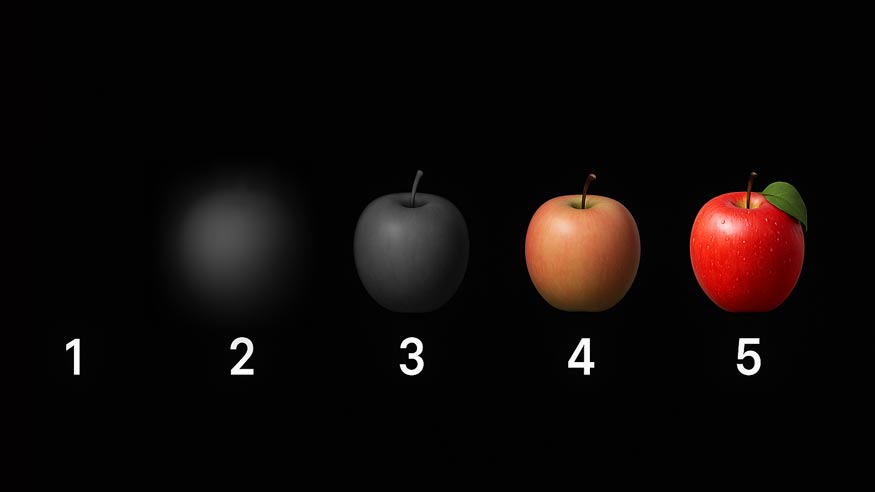
- Learn the scale once. 1 = No image at all, 5 = Perfectly clear. See the picture above for reference. Answer with your first instinct.
- Complete pages in order. Quick context → visual imagery → other senses → imagery use.
- Answer honestly. Rate what you actually experience, not what you think is “correct.”
- Submit to see results. You’ll get a main category, a sensory profile, and usage insights.
- Retake later (optional). Imagery can vary with sleep, stress, and attention; a second pass helps confirm your pattern.
Understanding Your Results
Your report combines three parts: Visual vividness (main signal), Other senses (auditory, tactile, olfactory, gustatory, bodily, emotion tone), and Imagery use (how often imagery shows up day-to-day).
Main Category (Visual Imagery)
- Consistent with aphantasia: Very low visual vividness (averages near 1–2). Little or no picture on demand. People in this range often excel with verbal, logical, or spatial strategies plus external visuals.
- Low imagery: Below-average vividness (≈2–3). Images are faint, intermittent, or effortful. Hybrid planning (bullet lists + simple sketches) tends to work best.
- Typical imagery: Mid-range vividness (≈3–4.2). Expect ordinary day-to-day variability.
- Hyperphantasia-like vividness: Very high vividness (≳4.2). Mental pictures can feel lifelike and richly detailed.
Other Senses Profile
If non-visual senses score higher than visual, you may think best in sound, rhythm, touch, or body feelings. If they score lower, you may be strongly visual with less sensory variety. Lean on stronger modalities for learning, recall, planning, and creativity.
Imagery Use vs. Vividness
- High use + low vividness: You already compensate well. Keep leveraging outlines, checklists, and quick sketches.
- Low use + high vividness: Untapped potential. Try method of loci, storyboards, or brief scene construction before study or problem-solving.
Next Steps Based on Your Pattern
- If results suggest aphantasia: Prefer semantic cues (keywords, stories), diagrams, and external visuals. Retake once to confirm stability.
- If results show low imagery: Use hybrid notes (bullets + boxes/arrows). A 5–10s “scene setup” can help before tasks.
- If results are typical: Combine imagery with spaced repetition for memory-heavy topics.
- If results indicate hyperphantasia: Channel vivid scenes into planning/creativity; if overwhelming, use grounding (naming sensations, tactile focus).
FAQ
Is this a diagnosis?
No. It’s a self-assessment aligned with validated imagery questionnaires and objective physiology. It’s for personal insight and education.
Can I have aphantasia if I still dream in pictures?
Yes. Many people report minimal voluntary imagery yet retain visual dreams. Dream imagery is involuntary and can dissociate from waking imagery.
Why do my scores change when I retake?
Attention, fatigue, stress, and environment can shift imagery. If two attempts cluster in the same band, that’s likely your baseline.
My visual score is low but other senses are strong—what does that mean?
That suggests modality-specific imagery. Think in sounds, textures, or bodily feelings and use those strengths for planning, learning, and memory.
Can imagery be trained?
Evidence is mixed. Some people find small gains with guided imagery or drawing practice. Regardless, alternative strategies work very well.
Why not just one item like “imagine a horse”?
Single items are noisy. This tool aggregates multiple scenes and senses to reduce error and better capture your overall pattern.
How reliable is this test?
Items are adapted from imagery measures with solid psychometrics, and physiology (e.g., pupil response to imagined light/dark) corroborates differences in imagery strength. The test is based on these sources:
- Campos & Pérez-Fabello (2011) — psychometrics of VVIQ/VVIQ-2: PubMed
- Andrade et al. (2014) — validation of PSIQ (multi-sensory imagery): PubMed
- Kay et al. (2022) — pupillary light response tracks imagery; absent in aphantasia (group-level): eLife
What is your result? Would you like to take any other tests on our website? Share in the comments below!
CalcuLife.com







Leave A Comment