

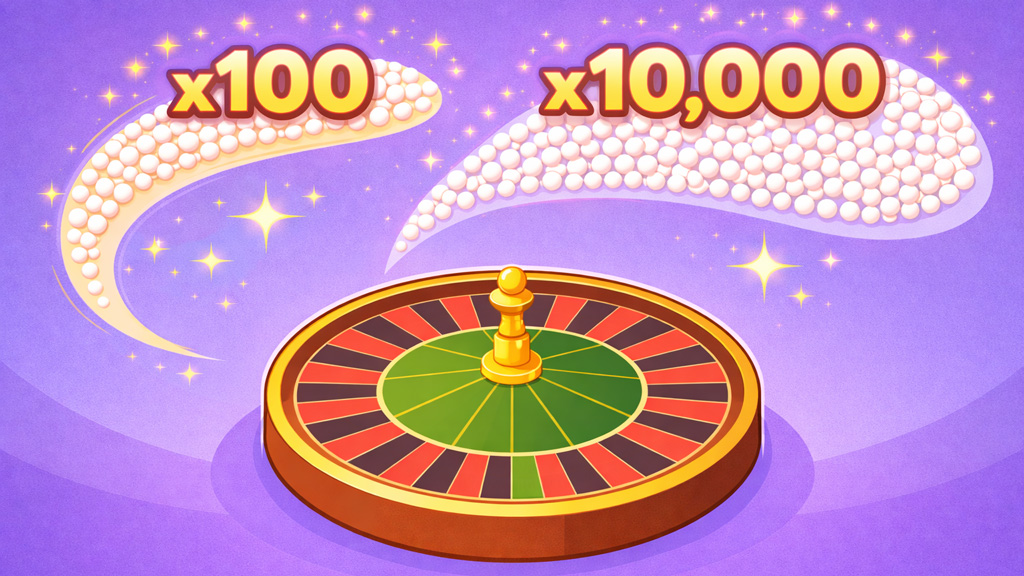
This roulette simulator is a visual, hands-on way to see what roulette really is: a fast random number machine where the math is tilted in the house’s favor. It is built for learning, not for hype. You can place bets, spin a realistic wheel, and then run big simulations (100 or 10,000 spins) to watch the long-run outcome settle into the same pattern every casino relies on: the casino wins over time.


What this tool is for
- Understand randomness: Each spin is independent. The wheel does not “remember” what happened before.
- See variance vs long-run reality: You can win short-term, lose short-term, or bounce around a lot. Over many spins, the house edge starts showing up more clearly.
- Learn the real difference between European and American roulette: The extra zero on American wheels makes the odds worse for the player.
- Discourage gambling myths: It helps you spot traps like “I’m due for a win” or “red has to hit soon.”
How to use it
- Pick the wheel type: European (single 0) or American (0 and 00).
- Select a chip value: Chip buttons set how much you add or remove per click. Bets start simple and fast.
- Click the betting table: Click any number or outside bet (Red, Black, Even, Odd, 1-18, 19-36, dozens) to place chips.
- Spin: The wheel animates, the ball lands, and your cash updates based on the outcome.
- Run test spins: Use 100 or 10,000 spins to simulate the same bet setup repeatedly and see the statistical picture.
Key features
European vs American roulette switch
- European (0): One green pocket. Better (less bad) odds than American roulette.
- American (0 + 00): Two green pockets. This increases the house edge and makes “fair” looking bets quietly worse.
Fast, click-based betting
- One chip selector: Pick a chip, then click the table to apply it.
- Add / Remove modes: Quickly build a bet or scale it down without typing numbers everywhere.
- Bet slip: Shows exactly what you have on the table, with amounts and easy removal.
Cash tracking that shows reality
- Starts at $100: Simple baseline to feel wins and losses.
- Allows negative cash: On purpose. It highlights how chasing losses can spiral and how “just one more spin” can get ugly fast.
- Total stake display: You always see how much you are risking per spin.
Spin history and live stats
- Spin history: Shows recent results and how each spin affected your cash.
- Color and parity breakdown: Red vs Black vs Green, Even vs Odd, plus total spins.
- Number frequency table: Lets you see distribution over time and how randomness looks in practice.
Test mode simulations (100 and 10,000 spins)
- Keeps your current bets: The simulator uses the exact bet layout you set on the table.
- Does not change your live cash: Tests are for analysis, not “playing.”
- Shows ending cash and profit: Makes the long-run expectation painfully obvious without you needing to do math.
What the results mean, and why the casino wins
Roulette looks fair because the wheel is random. The trap is that the payouts are designed so the expected value is negative for the player. That “small” edge is what pays for the lights, the building, the staff, and the casino’s profit. The longer you play, the more spins you give that edge time to work.
- Short run: Anything can happen. You might win big, you might lose fast, you might hover near even.
- Long run: Outcomes tend to drift toward the house advantage. More spins usually means more chances for the edge to grind you down.
Common myths this simulator helps break
- “I’m due”: Past spins do not change future odds. A streak is not a promise of a reversal.
- “I can read patterns”: Random sequences naturally create clusters that look meaningful. That does not create an advantage.
- “I’ll just bet bigger to get it back”: Raising stakes increases risk, not fairness. It can accelerate losses.
A responsible note
This tool is meant to educate and to discourage gambling, not to promote it. If gambling is becoming stressful, expensive, or hard to stop, consider reaching out to a trusted friend or a local problem-gambling support service in your area. Getting support early is a power move, not a failure.
CalcuLife.com







Leave A Comment