

This Ishihara color vision screening with adaptive difficulty uses procedurally generated dot plates to probe red-green perception on both protan (L-cone) and deutan (M-cone) axes. It’s built for quick, repeatable screening: students, clinicians-in-training, pilots-in-training, designers, and anyone curious about color discrimination can complete 20 plates and receive structured results (score, accuracy, per-axis thresholds, response times, and a concise interpretation). The engine escalates difficulty as you answer correctly and estimates color discrimination thresholds rather than giving a simple pass/fail-useful as a pre-check before formal testing with standardized material.
Ishihara Multi‑Axis Color Vision Screening
This adaptive screening simulates Ishihara-style plates across red–green axes (Protan & Deutan) to estimate colour discrimination thresholds.
Test Instructions
- Look at the circle and identify the number formed by the coloured dots
- Type the number you see in the input field and click Submit
- If you cannot see a number, you can click Skip
- The test adapts per colour axis; harder plates appear after consistent correct responses
- Complete all 20 plates for a comprehensive assessment
- Ensure neutral lighting; disable colour boosting / night mode / HDR
- The test measures your response time for each plate
Test Results


How to use the test
- Check your setup: disable Night Shift/blue-light filters/HDR, use neutral room lighting, and view at arm’s length on a well-calibrated display.
- Start the session and look for the number formed by colored dots inside the circle.
- Enter the number (1-99) and select Submit, or choose Skip if no number is visible.
- The screening adapts to performance: several correct responses increase challenge; errors reduce it.
- Watch the difficulty indicator; it shows both level and which axis (Protan or Deutan) you’re on.
- At the end you’ll see score, accuracy, median response time, and estimated per-axis threshold (smallest Δh resolved).
- Interpreting results: lower thresholds (smaller Δh) with good accuracy suggest typical red-green discrimination; consistently high thresholds or difficulty at easier levels may indicate a protan or deutan deficiency pattern and merit clinical testing.
Features and what the results mean
- Adaptive Ishihara-style plates across two axes: Protan (L-cone) and Deutan (M-cone)
- Seven difficulty levels (Very Easy → Extreme) that tune hue separation (Δh), saturation, dot density, and numeral size
- Smart scheduling that alternates axes based on your recent performance to gather balanced evidence fast
- Extreme threshold probing at the top level with micro-steps to pinpoint the smallest resolvable Δh
- Lightness-matched figure/background dots to minimize luminance cues and stress true chromatic discrimination
- Procedurally generated dot patterns and distractor shapes for high plate variety and low memorization effects
- Real-time difficulty indicator showing level and current axis (Protan or Deutan)
- Instant feedback (Correct/Incorrect/Skipped) with per-plate response time readout
- Comprehensive session metrics: score (n/20), accuracy (%), median response time (ms)
- Per-axis threshold estimate: smallest Δh (degrees) you resolved for Protan and Deutan
- Automatic per-axis classification (normal / mild / moderate / marked / severe) derived from your thresholds
- Detailed performance breakdown by level and axis, including attempts, correct count, and accuracy
- Quality checks that flag too-few trials, unusually fast/slow responses, or unbalanced axis sampling
- Clear result headline summarizing whether findings align with typical red-green perception or a protan/deutan pattern
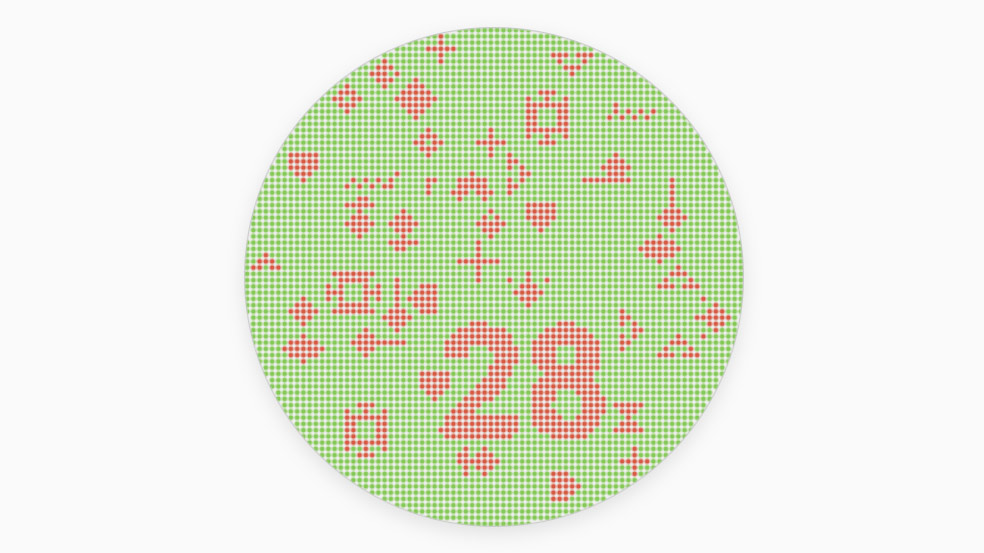
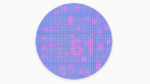
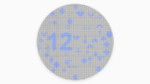
Ishihara plate with number 28 on it
Practical background: red-green screening-what matters
Protan vs deutan patterns: Protan deficiency shifts sensitivity linked to L-cones (often affecting reds); deutan deficiency involves M-cones (affecting greenish hues).
Why thresholds beat pass/fail: A numeric threshold (Δh) reveals how close two colors can be before they fuse-useful for monitoring change over time.
Real-world impact: Elevated thresholds can affect tasks relying on red-green cues (status LEDs, wiring, safety signals, aviation PAPI lights, medical imaging overlays, UI states).
Display considerations: Gamut, brightness, viewing angle, and color-management settings can bias results; repeatability improves with consistent setup.
When to seek clinical testing: Persistent difficulty at moderate levels, asymmetric results (only protan or only deutan affected), or functional problems at work/school.
FAQ
- What does this Ishihara-style screening measure? It estimates red-green color discrimination thresholds and patterns along protan and deutan axes using adaptive plates.
- Is this the same as the official Ishihara test? No. It emulates Ishihara principles for screening; official, standardized plates are used for clinical diagnosis.
- What is a “threshold Δh”? It’s the smallest hue separation (in degrees) you correctly identified; lower numbers indicate finer discrimination.
- What’s the difference between protan and deutan deficiency? Protan involves L-cones (red component), deutan involves M-cones (green component); each can elevate thresholds differently.
- Why might my results vary day to day? Lighting, display settings, fatigue, and attention can change performance; keep conditions consistent.
- Can I “train” my score? Familiarity reduces uncertainty, but true congenital red-green deficiencies won’t be corrected by practice.
- What should I do if my thresholds are high? Repeat under neutral conditions and consider a formal color vision assessment with standardized tests.
Sources and references
- American Academy of Ophthalmology – Color Vision Deficiency
- National Eye Institute – Facts About Color Blindness
- Wikipedia – Ishihara test
How did you do with the test? Would you like to see any other features? Let us know in the comments!
CalcuLife.com




Leave A Comment