

This self-check tests you for schizophrenia-like experiences with impact ratings. It follows constructs from validated screeners (PQ-B) and clinical interviews (SIPS, Mini-SIPS) and aligns with major guidance on early psychosis and schizophrenia. Answer each item Yes or No and, when Yes, rate distress.


How to use this tool
- Complete each question with Yes or No.
- If Yes, select how much it bothered or affected you (0–5).
- Finish all core items; then view the results panel.
- Use results as educational input only; seek clinical evaluation for concerns.
Features
- Single-item flow with Yes/No and 0–5 distress
- Core coverage rule across positive and negative domains
- Composite indicator with category banding
- Safety items as gating checks
- Context items for substance/medical confounds
- Domain counts: positive-like, negative, functioning, cognitive
- Results panel with indicator, bands, and stats
- Runs locally in the browser
Who should use it
Adults and students exploring unusual experiences that brings certain suspicions; clinicians-in-training; researchers needing a structured self-report pre-screen.
Schizophrenia and early psychosis
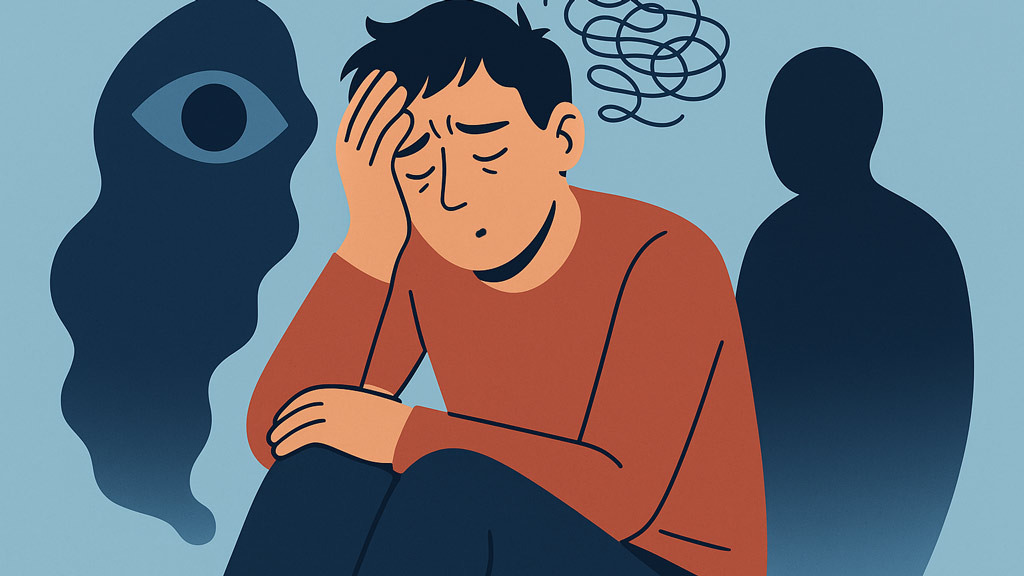
Psychotic symptoms include hallucinations, delusions, and disorganized thinking. Functional and motivational changes are common. Early identification and treatment improve outcomes. This tool estimates a screening indicator by combining symptom presence, distress, and functioning impact. Only clinicians can diagnose.
Limitations
- Educational, not diagnostic
- Not a probability of schizophrenia
- Subject to recall bias and context effects (sleep loss, stress, substances, medical issues)
- Not a substitute for professional assessment
When to seek professional help
- Thoughts of harming self or others, or inability to care for basic needs
- Persistent or worsening symptoms impacting work, school, or relationships
- Symptoms after medical changes, new medications, or substance use
United States crisis support: call or text 988.
Scientific background
The logic mirrors published screeners and interviews. PQ-B emphasizes symptom presence with associated distress; SIPS and Mini-SIPS structure clinical evaluation and risk syndromes. National guidance describes assessment, differential diagnosis, and care pathways.
- PQ-B preliminary validation (Loewy et al., 2011)
- Structured Interview for Psychosis-Risk Syndromes (SIPS) 5.5
- Mini-SIPS 1.0 (Yale)
- NIMH: Schizophrenia
- NICE CG178: Psychosis and schizophrenia in adults
FAQ
What does the percentage in the results mean?
A 0–100 heuristic index from endorsed items, average distress, and domain weights. Not a diagnosis.
Why ask about distress?
Distress improves screening relevance, as in PQ-B.
Why include safety and context items?
Acute risk or clear alternative explanations supersede risk estimation.
Can this replace an evaluation?
No. Only a clinician can diagnose using structured methods such as SIPS.
Where to get help?
United States: call or text 988.
What’s your result in this test? Would you like to share your unique mental state? Speak your mind in the comments!
CalcuLife.com




Leave A Comment