

This tool turns a cat’s age into a “human years” estimate so life stage makes sense at a glance. It uses a stepped model tuned for cats: the first year counts as 15 human years, the second adds 9, and each year after adds 4. Months are accepted for better precision, especially under two years. It helps you understand your pet’s life stage, it’s not a veterinary diagnosis tool.
🐱 Cat Age to Human Age Converter


How to use the calculator
- Enter the cat’s age in years, months, or both. Months can be any non-negative number.
- Optionally add the cat’s name to personalize the result.
- Read the human-years estimate and the life-stage badge. Copy or reset as needed.
The model behind the numbers
- First year = 15 human years.
- Second year = +9 human years (total 24 by the end of year two).
- Each additional year = +4 human years. Partial years are prorated by months.
Example: 3 years, 6 months → 24 + 4 × 1.5 = 30 human years.
Quick reference table
| Cat age (years) | Human years |
|---|---|
| 0.5 | ≈ 7.5 |
| 1 | 15 |
| 2 | 24 |
| 3 | 28 |
| 4 | 32 |
| 5 | 36 |
| 6 | 40 |
| 7 | 44 |
| 8 | 48 |
| 9 | 52 |
| 10 | 56 |
| 12 | 64 |
| 14 | 72 |
| 15 | 76 |
| 18 | 88 |
| 20 | 96 |
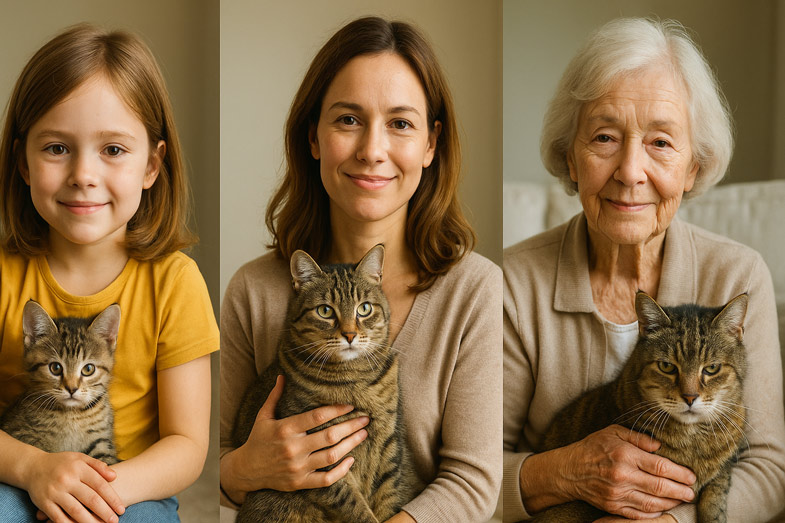
Life stages in plain language
- Kitten (0–1y): Fast growth and social learning. Spay/neuter planning, vaccinations, litter training, gentle handling.
- Young adult (1–6y): Stable health and behavior. Ideal time for enrichment, weight control, dental habits.
- Mature (7–10y): Subtle changes begin. Annual exams matter more; watch body weight and teeth.
- Senior (10–15y): Mobility, kidneys, and oral health need closer attention. Consider twice-yearly vet visits.
- Geriatric (15y+): Comfort, routine, and early signs of pain or cognitive change become the focus.
Why months matter
Under two years the curve is steep: a few months can shift the “human years” number a lot. Entering the exact months improves accuracy for kittens and young adults.
What influences real-world aging
- Body condition: Lean cats age better. Excess weight raises risk for diabetes, arthritis, and urinary issues.
- Lifestyle: Indoor cats tend to live longer. Safe outdoor time needs supervision or enclosures.
- Preventive care: Vaccinations, parasite control, dental cleanings, and routine labs catch problems early.
- Genetics and history: Some purebred lines have known risks; shelter cats may have unknown early stressors.
Healthy-aging checklist
- Scheduled vet exams: annually for adults; every 6 months for seniors.
- Teeth and gums: daily brushing if possible; dental diets or treats as advised.
- Weight and diet: measure meals; choose complete, balanced food appropriate for life stage.
- Water and kidneys: multiple water stations or fountains; monitor litter box changes.
- Mobility and pain: use ramps or steps; ask about joint supplements or pain control.
- Enrichment: climbing, hiding, puzzle feeders, and daily play to reduce stress and boredom.
Common myths
- “Just multiply by seven.” Not accurate for cats. Early years map to many human years, then the pace slows.
- “Indoor cats don’t need checkups.” They do. Many conditions develop silently.
- “All seniors are the same.” Two 14-year-olds can differ widely; your vet reads the cat, not just the number.
FAQ
What if I only know months? Enter them all; the calculator converts months directly.
Do breeds change the formula? Less than in dogs. After age two, a steady +4 human years per cat year is a practical rule.
My result seems off. Use it as a conversation starter. The best assessment is a physical exam and history.
Share your cat’s story
Post your cat’s name, age, the human-years result, and one tip that keeps them happy at this stage. Other cat people will learn from your experience.
CalcuLife.com










Leave A Comment